


Terugblik LIFE IP webinar: ‘improving biodiversity with best practices and tools for area-oriented collaboration’ (ENG)
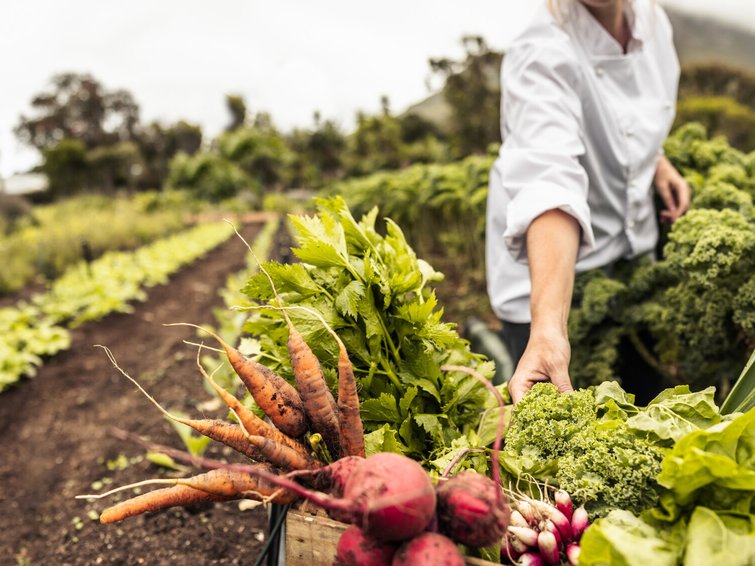
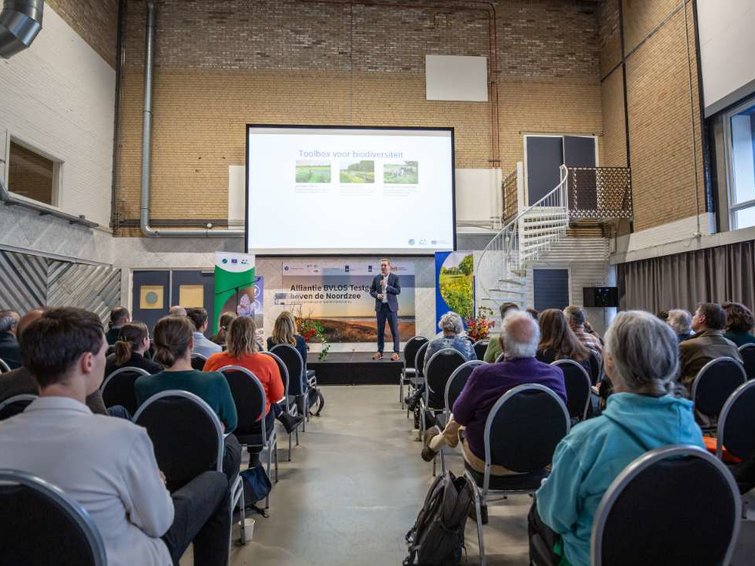
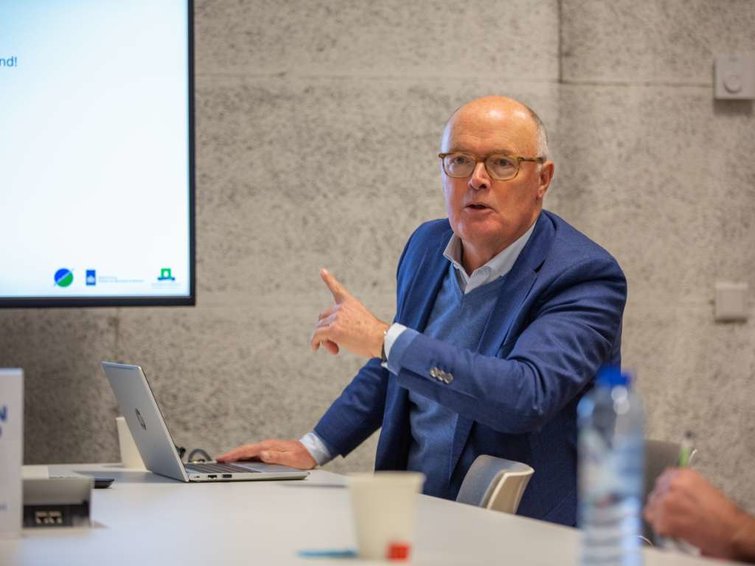
Ronald Hiel, managing director of the Dutch Deltaplan for Biodiversity Restoration, hosted the webinar: “We can be very proud that we we’re able to bring together presentations from LIFE IP-programs from five European countries: Netherlands, Germany, Ireland, Latvia and France.” These programs showcase European initiatives that strengthen biodiversity. The common thread through these programs is their shared focus on improving biodiversity in agriculture, nature conservation areas, and food supply chains, while keeping land use economically viable.
The program consisted of presentations of the following initiatives from different European countries:
- Netherlands: LIFE IP All4Biodiversity program, presented by Francisca Demmendal Wit
- Germany: LIFE Responsible Sourcing & LIFE Fit for Biodiversity, presented by Patrick Trötschler
- Ireland: Horizon Europe FarmBioNet’s, presented by Ben Mehedin
- Latvia: LIFE IP LatViaNature, presented by Maija Medne & Baiba Strazdina
- France: LIFE Biodiv’Paysanne & LIFE BiodivFrance, presented by Chloe Malik & Anne Cazin
Watch the opening presentation by Ronald Hiel here or below
LIFEIP All4Biodiversity by Francisca Demmendal-Wit
The Dutch LIFEIP All4Biodiversity program’s main goal is to achieve the Natura2000 targets and improve the quality of nature by reducing stress factors around the Natura2000 areas. That is done by collaborating with stakeholders in the transition zones, together making up for 13 partners. The program is strongly connected with the Deltaplan for Biodiversity Restoration and based on shared factors of succes: (1) Commitment and shared values; (2) Optimise collaboration on regional level; (3) Develop business models with biodiversity as source of income; (4) Relevant and consistent law and regulation; and (5) Adress knowledge gaps.
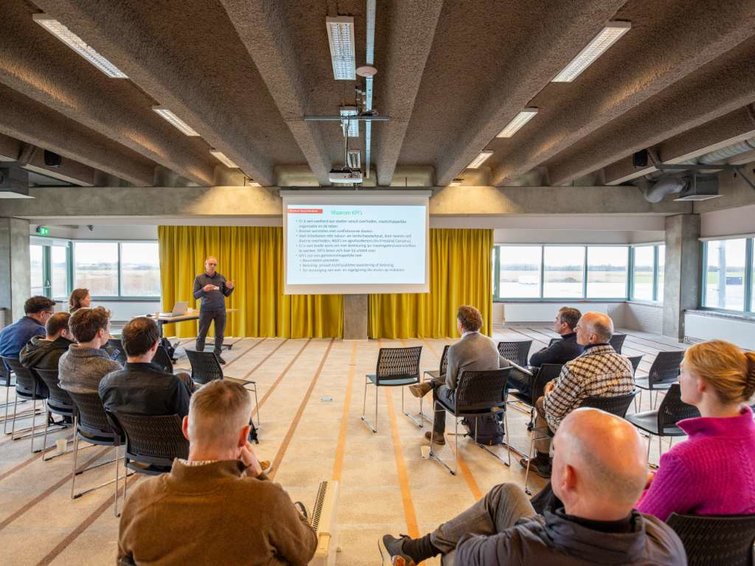
Within this project, several pilots, spread across the Netherlands, started. All the knowledge, lessons learned, and experiences were translated into useful tools. These tools can be found in the Toolbox for Biodiversity. In her presentation, Francisca goes into more detail about the examples of ‘Brabants Bodem’ and ‘Rotterdam de boer op!’. The first one, Brabants Bodem, being a Biodiversity Monitor for the dairy industry, based on KPI’s. “It’s a result-based reward system to maintain dairy farming while improving its biodiversity performance”, explains Francisca.
Want to hear more about the pilots, examples and the results of this Dutch LIFEIP programme?
Watch the recording of the presentation by Francisca here or below
LIFE Responsible Sourcing by Patrick Trötschler
The question is no longer whether we need to protect insects, but how we can best achieve it. The goal of the German ‘LIFE Insect Responsible Sourcing Regions’ (IRSR) project is to enhance protection and create better conditions for pollinators and all insects across as large an area as possible. Patrick Trötschler, managing director of the Lake Constance Foundation, explains during his presentation that in seven insect-friendly regions (Allgäu, Lake Constance, Bliesgau, Hohenlohe, Northern Upper Rhine, Wendland, and Vinschgau/South Tyrol), 66 agricultural demonstration farms implemented various measures to achieve the goals that were set. Over 1,500 individuals were trained, including local government representatives, forestry officials, and numerous farmers and advisors. In essence, the IRSR project aimed to establish regional partnerships for insect conservation, enhance insect-related expertise, refine existing agricultural policies, and raise consumer awareness about the importance of protecting insects.
The other project Patrick Trötschler presents, is called ‘Fit for Biodiversity’. It promotes biodiversity in the food sector, as sustainable food production fosters greater biodiversity. Therefore, they worked on incentives in the food production sector, analysing more than 30 of them. More biodiversity creates better and safer food. Our food production is inconceivable without biodiversity. Next month they will publish a detailed guideline on effective incentive schemes to improve biodiversity in foodsystems.
Want to hear more about the outcomes, achievements and recommendations that came from these projects?
Watch the recording of the presentation by Patrick here or below
Horizon Europe FarmBioNet by Ben Mehedin
“Imagine that in my lifetime - I was born in the 1970s – I’ve lived through 73% decline in biodiversity”, Ben Mehedin tells the audience. “That’s why FarmBioNet, together with 19 partners, from research institutions to NGOs, aims to stop biodiversity loss.” Because farmland is one of the dominant land uses in Europe, the FarmBioNet project focuses on the agricultural landscape, in particular around Natura 2000 areas. The project aims to work together with farmers to find out what biodiversity-friendly farming (BFF) practices would be by stimulating knowledge exchange between the farmers, foresters, advisors, and other crucial stakeholders. These BFF practices support nature by providing more diversity in agricultural land use, like adding native hay meadows, reducing pesticide use, planting trees, and digging ponds.
In the recording below, you can watch the full presentation of Ben Mehedin on all insights from the FarmBioNet project.
Watch the recording of the presentation by Ben here or below
LIFEIP LatViaNature by Maija Medne & Baiba Strazdina
Maija Medne presents ‘Blooming Meadows’, a pilot program for grassland conservation in Latvia within the eight-year integrated LIFE project LatViaNature: “The project is about a new approach in collaboration with farmers: how can we cooperate to raise awareness of biodiversity in meadows and to help with grassland conservation?” In Latvia, grassland is the most endangered group of habitats and is rapidly disappearing. Maija: “Within the LIFEIP LatViaNature program, it was our aim to simultaneously reach three important goals: the program must contribute to nature conservation, be easy to administer, and be interesting to farmers and other landowners.” Examples of the latter are annual training with involved landowners, consultation sessions, close contact through WhatsApp, and landowners taking part in the monitoring of their own grasslands. “For landowners to really know their grasslands and understand it, we believe this helps to manage grasslands in a biodiversity-friendly way and enhance these types of habitats”, Maija Medne ends her presentation.
In order to promote grassland conservation and enhance public awareness of the importance of these habitats, a “semi-natural grassland product”-label was created. In her presentation, Baiba Strazdina talks about the several benefits of this label: “The benefits for consumers are high-quality products with reliable information about their origin and production. Besides, they support farmers who contribute to nature conservation in this way.” For label-users, the benefits vary from individual consultations to marketing support. Baiba concludes her presentation by saying that more farmers lead to more grassland-friendly products. More consumers can buy these products, which supports the conservation of more well-managed grasslands”.
Are you interested in hearing more about the LatViaNature project?
Watch the recording of the presentations by Maija and Baiba here or below
LIFE Biodiv’Paysanne & LIFE Biodiv’France by Chloe Mailik & Anne Cazin
The projects Biodiv’Paysanne and Biodiv’France are coordinated by the French Office for Biodiversity (OFB) with 30 partners. Chloé Malik presents Biodiv’Paysanne, which aims to safeguard biodiversity and ecosystem services in Occitanie by protecting 26,000 hectares of vital natural sites. The project focuses on restoring land and creating new protected zones. This is done by helping 60 farmers transition to eco-friendly methods using new diagnostic tools and management plans. This project brings together conservationists and the agricultural community to protect nature through agro-ecological farming.Anne Cazin speaks about the Biodiv’France project in her presentation. This project aim is to implement France’s National Biodiversity Strategy 2022–2030. Therefore, their focus area is the whole of France. Anne Cazin: “Spread out over six objectives, the ambition is to regain biodiversity in France. Therefore, we act on both direct and indirect levers.” One of the objectives Anne goes into detail about, is no. 3 ‘bring about changes in practices that integrate biodiversity in the main sectors that have an impact on biodiversity’. “Of course, one of these areas is agriculture”, says Anne. “But to reach our goals and objectives, we need to work on it throughout the whole agricultural chain, not just at the farm-level.” Therefore, they came up with five steps to support voluntary agri-food stakeholders in becoming more biodiversity-friendly: understand, assess, define, implement, and get involved.
Want to hear Chloé and Anne explain more about the project?
Watch the recording of the presentations by Chloé and Anne here or below